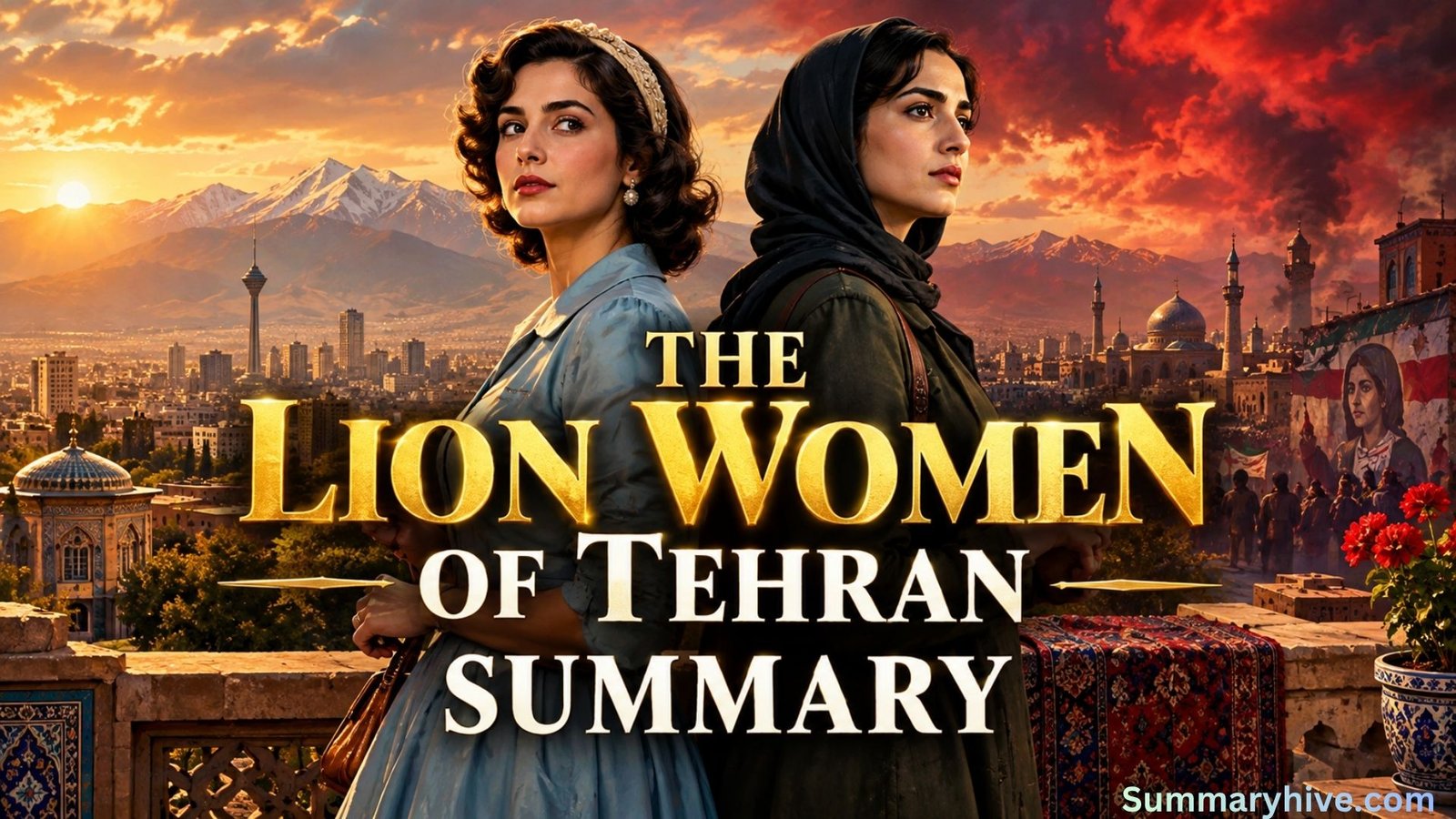
Some friendships are strong enough to survive decades of silence, and some betrayals are painful enough to almost break them anyway. That tension is exactly what makes The Lion Women of Tehran by Marjan Kamali one of the most talked-about historical fiction releases of 2024. If you just finished the book and want to make sure you understood every piece of it, if you are trying to decide whether to pick it up, or if you need a clear guide before your book club meeting, this article was built with you in mind.
This novel is not a quick, easy read; it spans more than seventy years of Iranian history, moves between continents, and asks hard questions about guilt, loyalty, and what it really means to be brave. That scope can make it tricky to keep every character, timeline, and political event straight, especially since the story does not unfold in a simple order.
Below, you will find a spoiler-free summary for readers who have not finished the book yet, a full plot summary with spoilers for those who want every detail explained clearly, a breakdown of the main characters and how they change, and a close look at the book’s central themes, including female friendship, class divide, and women’s resilience during Iran’s most turbulent decades. This guide was written after a close reading of the actual novel, not copied from other summaries, so you can trust the details here reflect what actually happens in the book.
The Lion Women of Tehran Quick Answer
The Lion Women of Tehran by Marjan Kamali follows Ellie and Homa, two Iranian girls who become inseparable friends in 1950s Tehran despite growing up in very different social classes. Their bond survives childhood but is shattered in early adulthood by a moment of jealousy that leads to Homa’s arrest by Iran’s secret police. The novel then follows both women across decades, through the Iranian Revolution and into the present day, as they grapple with guilt, sacrifice, and the possibility of forgiveness.
The Lion Women of Tehran Book Overview and Background
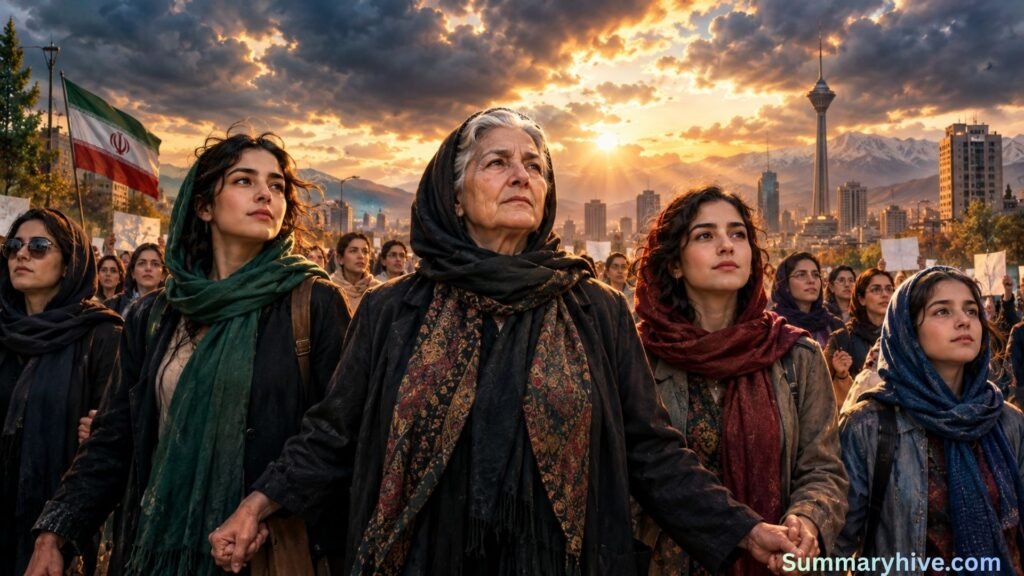
The Lion Women of Tehran is the third novel by Iranian American author Marjan Kamali, published in 2024 following her earlier books Together Tea and the widely praised The Stationery Shop. The novel is a work of sweeping historical fiction, following two women, Ellie and Homa, from their childhood in 1950s Tehran all the way through the 1979 Iranian Revolution and into the 2022 “Woman, Life, Freedom” protests that followed the death of Mahsa Amini.
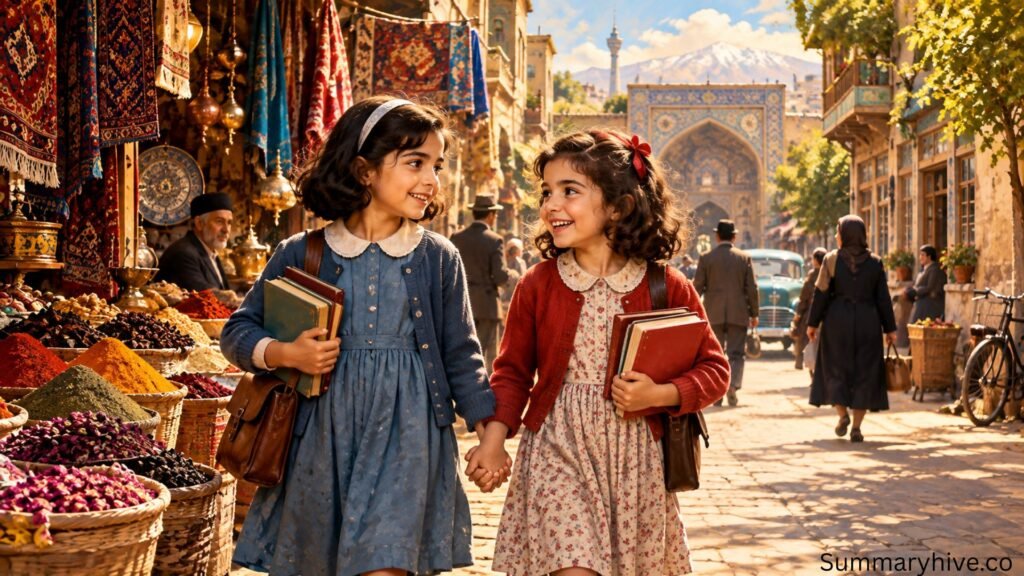
The book opens not at the beginning of the timeline but in December 1981, with a grown Ellie working behind a perfume counter in a Manhattan department store. When a letter arrives from Homa, a friend she has not spoken to in seventeen years, the story pulls back into the past to explain exactly what drove the two women apart. From there, the novel moves largely in chronological order, tracing their friendship from childhood through Iran’s most turbulent political decades, before closing with an epilogue set in 2022.
What makes this book stand out within women’s historical fiction is how tightly it weaves personal relationships into real political history. Events like the 1953 coup that removed Prime Minister Mossadegh, the rise of the Shah‘s government, the surveillance state built around SAVAK, and the eventual Islamic Revolution are not background noise; they directly shape the choices Ellie and Homa make and the consequences those choices carry. Readers going in should know this is as much a story about Iranian women and political history as it is a friendship novel, and the emotional weight of the story comes directly from how believably those two threads are tied together.
The Lion Women of Tehran Spoiler-Free Summary
At its heart, The Lion Women of Tehran is the story of two girls, Ellie and Homa, who meet as children in Tehran and form an unlikely, powerful friendship across a class divide that most people around them assume should keep them apart. As children, they dream of growing up to become “lion women,” fierce and unafraid, and for a while, their bond feels unbreakable.
As they grow into young women and enter Tehran University together, their lives begin pulling in different directions. Homa becomes deeply involved in student activism at a moment when speaking out in Iran carries real danger, while Ellie is drawn toward a quieter, more comfortable future. A single moment of jealousy and insecurity sets off a chain of events that neither woman can undo, and the consequences reshape both of their lives for decades to come.
From there, the novel follows Ellie and Homa across continents and across Iran’s changing political landscape, through revolution, war, and years of silence between them, toward a reckoning that neither woman could have predicted. Readers who enjoy character-driven family sagas with real historical weight, alongside novels like The Stationery Shop, will find this an emotionally rich, deeply researched read.
The Lion Women of Tehran Full Plot Summary (With Spoilers)
The Lion Women of Tehran novel begins in December 1981, with Ellie, now an adult, working at a perfume counter in Manhattan. A letter arrives from Homa, her childhood best friend, whom she has not spoken to in seventeen years, and the story shifts back to explain why.
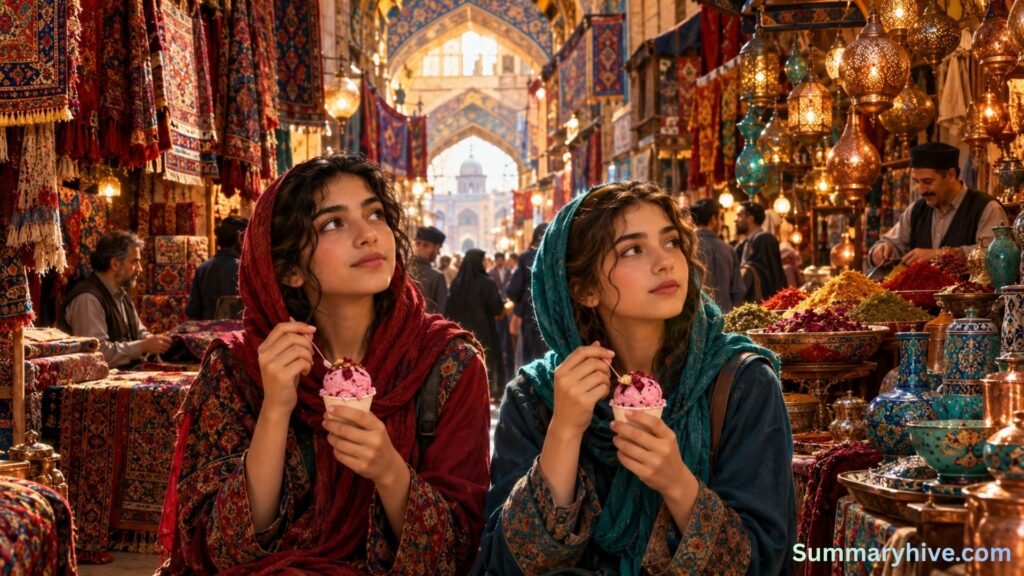
In 1950, seven-year-old Ellie lives a comfortable life in Tehran until her father dies suddenly, plunging her and her proud, grief-stricken mother into poverty and forcing them into a small home downtown, supported financially by Ellie’s Uncle Massoud. On her first day at a new school, lonely Ellie meets Homa, a warm, fearless girl from a poorer, politically active family. The two become inseparable, learning to cook together, exploring the Grand Bazaar, and dreaming of one day becoming fierce, unstoppable “lion women.”
When Ellie’s family’s fortune is unexpectedly restored, she returns to a wealthier school and social circle, and the girls drift apart for years. They reconnect as teenagers when Homa enrolls at Ellie’s elite high school, and their bond deepens again as they grow into young women and attend Tehran University together. There, their paths begin to diverge sharply: Homa becomes a committed student activist protesting the Shah’s government, while Ellie falls in love with a young man named Mehrdad and hopes for a quiet, stable future as his wife.
The turning point comes at a social gathering shortly after Mehrdad proposes to Ellie. Overcome with jealousy after seeing Homa and Mehrdad interact, Ellie confides in an acquaintance’s husband, a Colonel she does not realize is a secret police agent, revealing details about Homa’s role in organizing student protests. The next day, Homa is arrested. She is imprisoned and brutally mistreated, but she refuses to give up the name of the friend who translated protest materials for her, protecting Ellie even while suffering the consequences of Ellie’s careless words.
Homa is eventually released, pregnant, and builds a new life with her husband Abdol and their daughter, Bahar, while Ellie marries Mehrdad and eventually moves to the United States. As Iran descends into revolution and war, Homa asks Ellie to take Bahar to safety in America, and Ellie agrees, raising Bahar alongside her own guilt.
Years later, a medical crisis involving Bahar forces Ellie to finally confess her role in Homa’s arrest. In response, Homa reveals the truth she has carried silently for years: she always protected Ellie, even under interrogation. The two women reconcile on Homa’s terms, and the story closes in 2022, with Homa, now elderly, still marching for women’s rights in Iran, and her granddaughter Leily coming of age safely in the United States, carrying her grandmother’s legacy forward.
Meet the Characters of The Lion Women of Tehran
The emotional power of this novel comes from how fully realized each character is, especially the two women at its center. Here is a breakdown of the key figures and how they change across the decades.
The Lion Women of Tehran Character: Ellie (Elaheh)
Role & Arc:
Ellie is the novel’s central narrator, a girl who loses her family’s wealth as a child and later has it restored, shaping her lifelong desire for safety and stability over risk. Her arc is defined by a single moment of jealousy that causes catastrophic harm to the person she loves most, and by the decades she spends trying, imperfectly, to atone for it. By the novel’s end, she has transformed her guilt into genuine care, building a life around protecting Homa’s daughter and granddaughter.
The Lion Women of Tehran Character: Homa
Role & Arc:
Homa is Ellie’s childhood best friend, a fearless, politically committed young woman who becomes a student activist against the Shah’s government. Her arrest and imprisonment, caused indirectly by Ellie, define the rest of her life, yet she emerges from that trauma with her convictions intact, continuing to fight for women’s rights in Iran for decades. Her arc is ultimately one of extraordinary loyalty and hard-won forgiveness, choosing connection with Ellie over resentment even after everything she suffered.
The Lion Women of Tehran Character: Mehrdad
Role & Arc:
Mehrdad is Ellie’s love interest and eventual husband, whose relationship with Ellie is the unintentional catalyst for the novel’s central betrayal. He represents the safe, comfortable life Ellie chooses over political risk, and his steady presence supports her throughout her adult life in the United States, including when the couple takes in Homa’s daughter Bahar.
The Lion Women of Tehran Character: Bahar
Role & Arc:
Bahar is Homa’s daughter, born after her mother’s release from prison. Sent to live with Ellie and Mehrdad in America during Iran’s revolutionary upheaval, Bahar grows up carrying both her mother’s resilience and the complicated history between Ellie and Homa. Her medical crisis later in the novel becomes the catalyst that finally forces Ellie’s confession and the two women’s reconciliation.
The Lion Women of Tehran Character: Sousan and the Colonel
Role & Arc:
Sousan is an acquaintance of Ellie’s whose husband, referred to as the Colonel, turns out to be a secret police operative. Their presence in the story is what transforms Ellie’s careless jealousy into a devastating betrayal, and Sousan’s later admission about her husband’s true role deepens Ellie’s guilt.
The Lion Women of Tehran Character: Uncle Massoud
Role & Arc:
Massoud is Ellie’s uncle, who financially supports Ellie and her mother after her father’s death. His steady presence contrasts with Ellie’s mother’s bitterness, offering Ellie one of her few stable relationships during a difficult childhood.
The Lion Women of Tehran Character: Leily
Role & Arc:
Leily is Bahar’s daughter and Homa’s granddaughter, representing the generation that grows up safely in the United States while still inheriting her grandmother’s legacy of courage. Her presence in the novel’s epilogue, set during the 2022 women’s rights protests in Iran, ties the family’s decades-long story to the present day.
The Lion Women of Tehran, The Betrayal That Changed Everything, Explained
The central betrayal in The Lion Women of Tehran is not committed out of cruelty; it grows out of ordinary human jealousy colliding with an extraordinarily dangerous political moment. After Mehrdad proposes to Ellie, she sees Homa interacting warmly with him at a party and is overtaken by insecurity. In an attempt to seem important in front of an acquaintance’s husband, a man she does not realize is connected to the secret police, Ellie reveals that Homa organized a student protest.
That single, careless conversation has consequences Ellie could never have imagined. Homa is arrested the very next day, imprisoned, and subjected to brutal treatment, including sexual assault, all without Ellie fully understanding, at first, that her own words set the arrest in motion. When she eventually learns the truth from Sousan, the guilt becomes something she carries silently for the rest of her adult life.
What makes this betrayal so devastating within the story is not just its consequences, but what Homa does with the knowledge of who caused it. Interrogators pressure her to name the friend who had been translating protest materials, a role Ellie herself had played. Homa refuses, protecting Ellie even while suffering for it. That act of protection, revealed to Ellie only years later, becomes the emotional core of the entire novel, reframing the story from one about betrayal into one about the depth of true loyalty.
The Lion Women of Tehran,Historical Background: Iran From the 1953 Coup to the 1979 Revolution
Understanding The Lion Women of Tehran fully means understanding the real Iranian political history it is built around. The novel opens not long after the 1953 coup, in which Prime Minister Mohammad Mossadegh was removed from power in an operation backed by foreign intelligence agencies, cementing the authority of Shah Mohammad Reza Pahlavi and the Pahlavi dynasty for the following decades.
Under the Shah’s rule, Iran modernized rapidly in some respects while also becoming a surveillance state, enforced by the intelligence and secret police organization known as SAVAK. This is the environment Homa moves through as a student activist: real reform movements existed, but so did real, brutal consequences for anyone caught organizing against the government, including imprisonment and torture of political prisoners. Ellie’s careless comment to a man connected to this system is what makes the betrayal in the novel so historically grounded rather than purely personal.
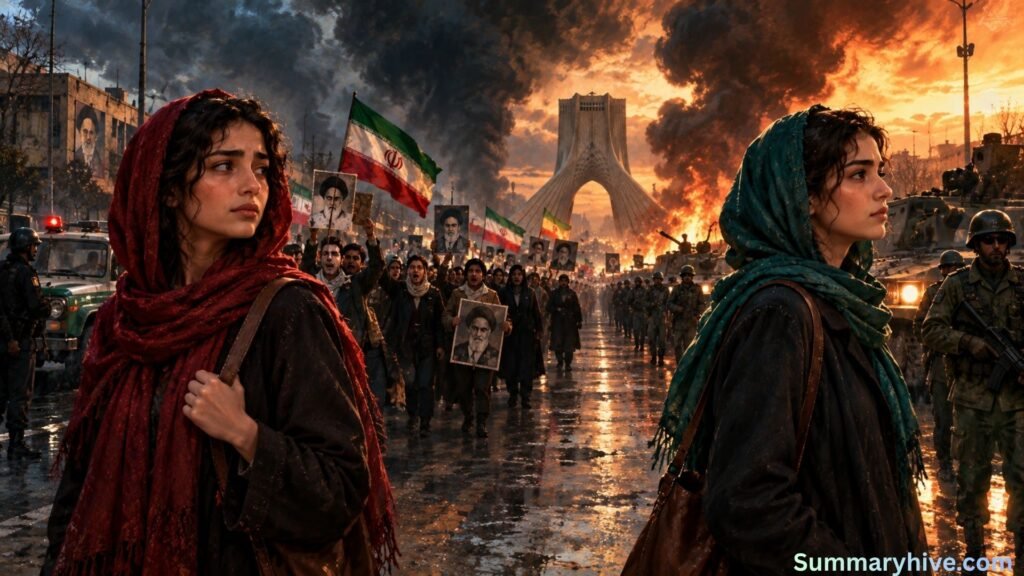
The novel then carries its characters through the buildup to the 1979 Islamic Revolution, which replaced the Shah’s monarchy with a new government that imposed strict new rules on women’s dress and public life. This shift directly affects Homa, who continues fighting for women’s rights in Iran under an entirely different, and in some ways even more restrictive, regime. The book closes decades later against the backdrop of the 2022 “Woman, Life, Freedom” protests, connecting Homa’s lifelong activism to the real demonstrations that followed the death of Mahsa Amini, and underscoring that the fight the novel depicts did not end with its characters’ story.
The Lion Women of Tehran Key Themes Explained
The Lion Women of Tehran Female Friendship Across Social Class
The bond between Ellie and Homa is the emotional spine of the novel, and it is tested repeatedly by the very real class divide between them. Kamali uses their friendship to show that genuine loyalty can survive inequality, distance, and even devastating harm, though not without real cost to both women.
The Lion Women of Tehran Guilt and Redemption
Ellie’s guilt over Homa’s arrest shapes nearly every decision she makes as an adult, from her anxious devotion to raising Bahar to her decades-long inability to face Homa directly. The novel treats redemption not as something that erases the past, but as something built slowly, through consistent care over many years.
The Lion Women of Tehran Women’s Resilience Under Political Upheaval
Homa’s story embodies women’s resilience in the face of state violence, from her imprisonment under the Shah’s government to her continued activism decades later against an entirely different regime. The novel makes clear that her courage is not a single act but a lifelong commitment.
The Lion Women of Tehran ,The Protectiveness of Mothers
Both Ellie’s mother and Homa, as a mother to Bahar, show fierce, sometimes difficult forms of maternal protection. The novel does not romanticize this instinct; it shows how protectiveness can curdle into bitterness in Ellie’s mother, while in Homa it becomes the foundation of her strength.
Symbolism: What Does “Lion Women” Mean?
The phrase “lion women” comes directly from Ellie and Homa’s childhood dream of growing up to be fierce and unafraid, and it recurs throughout the novel at pivotal emotional moments. It is used cynically at one point by the Colonel to manipulate Ellie into revealing information, which makes its later, sincere use even more powerful.
By The Lion Women of Tehran novel’s final chapters, the phrase has become something closer to a family inheritance. Bahar comes to embody her mother’s fire despite growing up in a different country, and in the epilogue, Homa’s granddaughter Leily watches footage of her elderly grandmother marching in protest, still living out the promise the two girls made to each other decades earlier. The symbol ultimately asks readers to consider what courage actually costs, and who ends up paying that cost across generations.
Class Divide and Social Inequality in the Novel
The class divide between Ellie and Homa is present from their very first meeting. Ellie’s family loses its wealth after her father’s death, placing her, temporarily, in the same social world as Homa, whose family has always lived with less. When Ellie’s fortunes are restored, the novel does not shy away from showing how quickly that shared world can dissolve, and how much effort it takes for the two girls to maintain their friendship across that gap once it reappears.
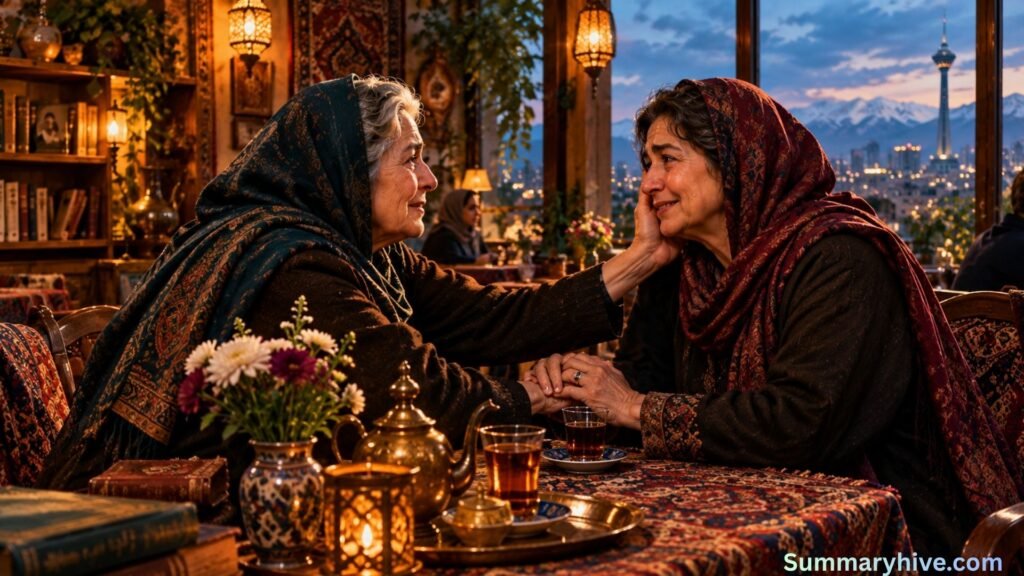
This class tension resurfaces throughout the book in smaller ways as well, from the different futures Ellie and Homa imagine for themselves, one oriented toward comfort and safety, the other toward risk and justice, to the different consequences each woman faces for the same political moment. The Lion Women of Tehran novel uses this contrast to ask a pointed question: how much of Ellie’s caution, and how much of Homa’s courage, comes from the different amounts of safety their social class afforded them.
Mother-Daughter and Family Relationships
Family relationships in the novel The Lion Women of Tehran are rarely simple. Ellie’s mother, a proud woman who never recovers emotionally from the loss of her husband and their wealth, treats her circumstances as a curse and struggles to offer Ellie warmth, leaning instead on her brother-in-law Massoud for support she refuses to fully accept. This contrasts sharply with the warmth Ellie finds in Homa’s household as a child.
Later in The Lion Women of Tehran novel, motherhood becomes a central force in a different way, as Homa is forced to send her own daughter Bahar away to keep her safe, and Ellie steps into a maternal role for a child she did not raise but feels deeply responsible for. These layered family relationships give the novel much of its emotional depth, showing that love within families can be complicated by pride, guilt, and circumstance without ever disappearing entirely.
How Does The Lion Women of Tehran End? (Ending Explained)
The Lion Women of Tehran novel’s ending centers on a medical emergency involving Bahar, whose alcohol poisoning at a party while living in the United States finally forces the reckoning Ellie has avoided for nearly two decades. At Bahar’s hospital bedside, Ellie confesses to Homa, who has come to see her daughter, that her own careless words all those years ago were what led to Homa’s arrest and imprisonment.
What follows is The Lion Women of Tehran novel’s most emotionally significant revelation. Homa tells Ellie that she already knew, and that during her brutal interrogation, she deliberately refused to give up Ellie’s name, even though doing so may have eased her own suffering. Homa chose to protect the very person responsible for her pain, an act of loyalty far deeper than any apology Ellie could offer. This moment reframes the entire novel: Ellie’s guilt does not disappear, but it is met with a form of forgiveness that is not about whether Ellie has earned it, but about who Homa has chosen to be.
In the years that follow, Homa arranges to visit the United States and watch her daughter and eventually her granddaughter grow up, while continuing to return to Iran to keep fighting for women’s rights, a choice that costs her years of imprisonment and decades without a passport. The novel closes with an epilogue set in September 2022, showing Bahar’s daughter, Leily, celebrating her eighteenth birthday at a Persian café that Ellie now owns in Lexington, Massachusetts, with Bahar, her husband Steve, and the extended family all present.
The final image of the novel is of an elderly Homa, still marching in the streets of Iran during the real-world “Woman, Life, Freedom” protests, watched from afar by her granddaughter through video footage, a direct link between the fierce dream two little girls once shared and the actual women’s rights movement unfolding in Iran decades later.
The Lion Women of Tehran Common Misconceptions About the Book
“Ellie betrayed Homa on purpose.” This is one of the most common misreadings. Ellie’s disclosure comes from jealousy and carelessness, not malice, and the novel is careful to show she has no idea the man she is speaking to is connected to the secret police until it is far too late.
“Homa forgives Ellie because Ellie deserves it.” The novel is explicit that Homa’s forgiveness is not a verdict on whether Ellie has earned it. It is framed as a reflection of who Homa chooses to be, consistent with the fierce, principled “lion woman” she declared herself to be as a child.
“The book is only about their friendship.” While the friendship between Ellie and Homa is the emotional core, the novel is equally invested in real Iranian political history, from the 1953 coup through the 2022 protests, and treats that history as essential to understanding the characters’ choices, not as mere backdrop.
Where The Lion Women of Tehran Fits Among Marjan Kamali’s Books
The Lion Women of Tehran is Marjan Kamali’s third novel, following Together Tea and her breakout success The Stationery Shop. Like her earlier work, this novel is deeply rooted in Iranian culture and history, and it continues Kamali’s focus on how political upheaval shapes ordinary lives and relationships. Readers who appreciated the emotional depth and historical grounding of The Stationery Shop will find similar strengths here, though The Lion Women of Tehran covers a significantly longer timeline and places female friendship, rather than romance, at its center.
Who Should Read This Book
This novel is best suited for:
Readers who enjoy character-driven historical fiction with real political stakes Fans of Marjan Kamali‘s earlier novels, especially The Stationery Shop Anyone interested in Iranian history, from the 1953 coup through the 2022 protests Readers who appreciate stories about female friendship tested by class and circumstance Book club members looking for a novel with rich discussion material around guilt, loyalty, and forgiveness Fans of multigenerational family sagas that span decades and continents Readers drawn to immigrant experience narratives alongside historical drama
If You Liked This, Try These Books
If The Lion Women of Tehran resonated with you, these books offer similar emotional and historical territory:
The Stationery Shop by Marjan Kamali, for another Iranian-set story of love and political upheaval Together Tea by Marjan Kamali, for more of the author’s exploration of Iranian identity The Kite Runner by Khaled Hosseini, for a friendship tested by betrayal against a backdrop of political upheaval A Thousand Splendid Suns by Khaled Hosseini, for another powerful story of women’s resilience under an oppressive regime The Henna Artist by Alka Joshi, for historical fiction centered on women’s friendship and independence Homeland Elegies by Ayad Akhtar, for another perspective on immigrant identity and political history The Seven Husbands of Evelyn Hugo by Taylor Jenkins Reid, for a decades-spanning story built around a long-held secret
Discussion Questions for Book Club
Do you think Ellie’s actions at the party were forgivable, given that she did not know the Colonel’s true role Why do you think Homa chose to protect Ellie during her interrogation, even knowing what Ellie had done How does the novel use the phrase “lion women” differently across generations, from Ellie and Homa to Bahar and Leily Do you think Ellie’s guilt made her a better or worse mother figure to Bahar How does the class divide between Ellie and Homa shape their different choices about activism and safety.
What does the novel suggest about the relationship between personal jealousy and political consequence How does the historical backdrop, from the 1953 coup to the 2022 protests, change your understanding of the characters’ choices Do you think Homa’s forgiveness of Ellie is realistic, or is it more of an ideal the novel is reaching for What role does Ellie’s mother’s bitterness play in shaping Ellie’s own choices as an adult How does the epilogue’s connection to the real “Woman, Life, Freedom” movement change the meaning of the ending
Frequently Asked Questions
What is The Lion Women of Tehran about?
It follows Ellie and Homa, two Iranian women whose lifelong friendship is tested by a betrayal that leads to Homa’s arrest, and traces both of their lives across decades of Iranian political history.
Is The Lion Women of Tehran based on a true story?
The novel is fictional, but it is grounded in real historical events, including the 1953 coup, the Shah’s government, the 1979 revolution, and the 2022 women’s rights protests in Iran.
How does The Lion Women of Tehran end?
Ellie confesses her role in Homa’s arrest, and Homa reveals she always knew and chose to protect Ellie anyway. The two reconcile, and the novel closes in 2022 with Homa still fighting for women’s rights in Iran.
Who are Ellie and Homa in the book?
Ellie is a woman from a once-wealthy family who marries Mehrdad and moves to the United States, while Homa is her childhood best friend, a lifelong activist who is imprisoned after Ellie unintentionally exposes her.
What causes Homa’s arrest in the novel?
Ellie, overcome with jealousy, mentions Homa’s role organizing a student protest to a man who turns out to be connected to Iran’s secret police, leading directly to Homa’s arrest.
Does Homa forgive Ellie?
Yes, though the novel is clear that her forgiveness reflects who Homa chooses to be rather than a judgment that Ellie has fully earned it.
Is The Lion Women of Tehran a sad book?
It deals with heavy subject matter, including imprisonment, sexual assault, and decades of guilt, but it ultimately builds toward reconciliation and hope rather than despair.
Who is Bahar in The Lion Women of Tehran?
Bahar is Homa’s daughter, born after her release from prison, who is later sent to live with Ellie in the United States for safety during Iran’s revolutionary upheaval.
What does “lion women” mean in the novel?
It refers to a childhood dream Ellie and Homa share of becoming fierce and unafraid, a phrase that recurs throughout the book and eventually passes down to later generations of their families.
Is The Lion Women of Tehran a sequel to The Stationery Shop?
No, it is a standalone novel, though it shares the same author and similar themes of love and political upheaval in Iranian history.
Is The Lion Women of Tehran worth reading?
For readers who enjoy emotionally rich, historically grounded fiction about friendship, guilt, and resilience, yes; it offers real depth alongside a compelling, decades-spanning story.
What age group is The Lion Women of Tehran written for?
It is written for an adult audience, given its mature themes involving political violence, sexual assault, and complex adult relationships.
Our Research and Editorial Approach
This summary was written after a close reading of The Lion Women of Tehran by Marjan Kamali, cross-referenced against reputable literary sources to confirm the accuracy of plot details, character arcs, and historical context. All content here is written in original language, and no text from the book itself has been reproduced beyond brief references under ten words. Every section was reviewed for factual accuracy against the actual events and historical backdrop of the novel before publication.
10 Related Article Ideas
The Stationery Shop by Marjan Kamali, summary and ending explained Together Tea by Marjan Kamali, summary and themes Complete guide to Marjan Kamali’s books in order Best historical fiction books about Iran and the Iranian Revolution The Kite Runner summary and character analysis A Thousand Splendid Suns summary and themes explained Best books about the 1979 Iranian Revolution Best historical fiction about female friendship Understanding SAVAK and the Shah’s Iran, historical context for readers Best book club picks for 2024 and 2025 historical fiction