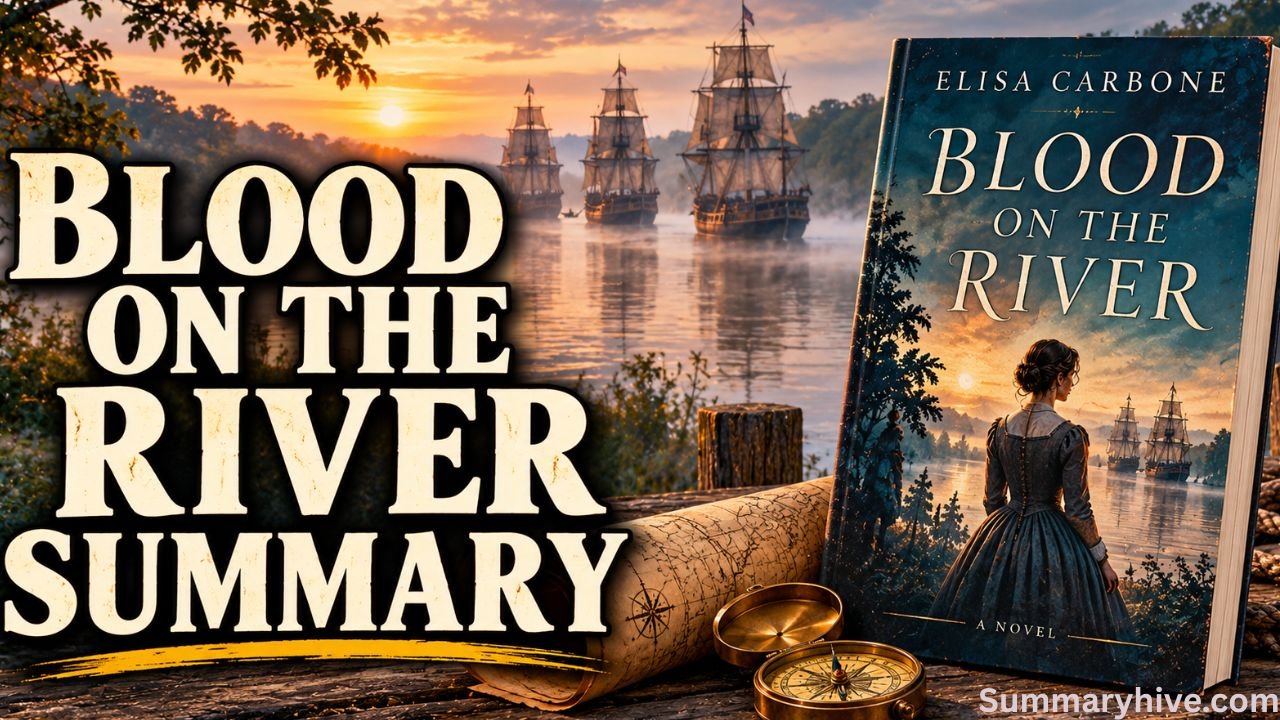
Imagine leaving everything you know behind and traveling across a huge ocean to a place where danger waits around every corner. You have no home, no family, and no idea what the future holds. This is the kind of adventure that Samuel Collier faces in Blood on the River: James Town, 1607 by Elisa Carbone.
Published in 2006, this exciting historical fiction novel takes readers back to the early days of English settlement in North America. The story follows a young orphan named Samuel Collier, who travels from London to Virginia as a servant to the famous English explorer Captain John Smith.
At first, Samuel dreams of finding gold and enjoying a better life. However, his journey becomes much harder than he expects. He faces dangerous ocean travel, sickness, hunger, difficult relationships, and conflicts between English settlers and the Native American people.
The novel also introduces important historical figures, including Captain John Smith, Pocahontas, and Chief Powhatan. Through Samuel’s eyes, readers discover how difficult life was for the first English settlers in Jamestown.
Whether you need a Blood on the River book summary for school, want to understand its historical background, or are deciding whether to read it, this guide will help you.
We will explore the complete plot, important characters, major themes, historical events, symbolism, and lessons readers can learn from Samuel’s journey.
Quick Answer: What Is Blood on the River About?
Blood on the River is a 2006 historical fiction novel by Elisa Carbone about twelve-year-old orphan Samuel Collier, who travels from London to Virginia in 1606 as a servant to Captain John Smith. After arriving in the New World, Samuel experiences the challenges of establishing Jamestown, including hunger, sickness, cultural conflicts, and dangerous relationships with the Powhatan people. Through these experiences, he learns about friendship, cooperation, courage, and survival.
1. Blood on the River: Book Overview and Important Details
Before exploring the complete Blood on the River plot summary, it is helpful to understand the basic information about the novel.
Elisa Carbone creates a story that combines real historical events with an imaginary young narrator. The main character, Samuel Collier, gives readers a personal view of the early days of English colonization in America.
Here are the important details:
| Book Detail | Information |
|---|---|
| Title | Blood on the River: James Town, 1607 |
| Author | Elisa Carbone |
| Original Publication Year | 2006 |
| Genre | Historical Fiction |
| Category | Middle Grade Fiction |
| Main Character | Samuel Collier |
| Historical Setting | London and Virginia |
| Time Period | 1606–1610 |
| Important Historical Figure | Captain John Smith |
| Other Important Figures | Pocahontas and Chief Powhatan |
| Main Location | Jamestown, Virginia |
| Central Subject | Early English settlement in America |
The novel is written for young readers, especially those interested in American colonial history and historical adventures.
One special feature of the book is its first-person storytelling. Readers experience events through Samuel’s thoughts and feelings rather than through a distant history lesson.
This makes the story easier to understand because readers can see how a young boy reacts to unfamiliar places, dangerous situations, and people with different traditions.
The novel also helps readers understand that history is not only about famous leaders and important dates. It is also about ordinary people who struggled to survive.
Who Is Elisa Carbone?
Elisa Carbone is an American author known for writing stories for young readers. She has a special interest in historical fiction and enjoys researching the small details that help bring the past to life.
Her interest in history can be seen throughout Blood on the River.
Also Read:/ugly-love-summary/
Instead of simply describing the founding of Jamestown, Carbone creates a young fictional character who experiences the challenges of that time.
Samuel’s story allows readers to explore questions such as:
- What was life like for poor children in seventeenth-century London?
- Why did English people travel to the New World?
- How did settlers survive in an unfamiliar environment?
- What happened when English colonists met Native American communities?
- Why were food, cooperation, and leadership so important?
The author also includes real historical figures and events. This combination of imagination and history makes the book useful for both entertainment and education.
Carbone’s approach is particularly helpful for middle school students who want to learn about Jamestown Virginia history without reading a difficult history textbook.
Her story reminds readers that historical fiction can make the past feel real while helping them understand the people who lived through it.
When and Where Does Blood on the River Take Place?
The story takes place mainly between 1606 and 1610, during the early period of English colonization in North America.
It begins in London, England, where Samuel struggles to survive without his parents. Later, he travels across the Atlantic Ocean aboard the Susan Constant, one of the ships carrying English settlers to Virginia.
After the long journey, Samuel reaches the coast of Virginia.
The English settlers establish a settlement called James Town, now commonly known as Jamestown.
The novel focuses on several important locations.
London, England
London is where Samuel’s difficult life begins.
He has no parents to care for him and must find ways to survive on the streets. His experiences teach him to be independent, but they also make it difficult for him to trust other people.
The Susan Constant, Blood on the River
The Susan Constant is the ship that carries Samuel and other English settlers across the Atlantic.
For Samuel, the journey represents the beginning of a completely different life.
However, the ocean voyage is not easy. The passengers face storms, fear, and the challenges of living together in a crowded ship.
Jamestown, Virginia
Jamestown becomes the most important setting in the novel.
The settlers hope to build a successful English colony, but they quickly discover that survival is difficult.
They must find food, build shelters, protect themselves, and understand the unfamiliar environment.
Point Comfort, Blood on the River
Point Comfort is another important Virginia location connected to the story.
It becomes especially meaningful as the dangers facing the Jamestown settlers increase.
These different locations help readers understand the journey from London to the New World and the difficulties of creating a settlement in unfamiliar territory.
Historical Background: Why Was Jamestown So Important?
To understand Blood on the River, readers should know a little about the real history behind the novel.
In 1607, English settlers established Jamestown in Virginia. It became the first permanent English settlement in what later became the United States.
The settlement was supported by the Virginia Company, which hoped to make money through trade, natural resources, and other opportunities in the New World.
Many English people believed America offered wealth and a chance to build a better future.
However, the reality was very different.
The settlers arrived in a place they did not fully understand. They lacked enough food, faced unfamiliar diseases, and struggled with the local environment.
They also entered lands already occupied by Native American communities.
One of the most powerful groups in the region was the Powhatan people, led by Chief Powhatan.
Their land, culture, and political relationships existed long before the English arrived.
The arrival of English settlers created new tensions over land, resources, power, and survival.
These conflicts form an important part of Carbone’s story.
The Role of Captain John Smith
Captain John Smith was a real historical figure who played an important role in the early Jamestown settlement.
In the novel, he becomes Samuel’s master and teaches him valuable lessons about survival and cooperation.
Smith believes that settlers must work together if they want their colony to survive.
His leadership becomes especially important when the English colonists face hunger, disagreements, and political problems.
The Role of Pocahontas and Chief Powhatan
Pocahontas was the daughter of Chief Powhatan and an important historical figure connected to early Jamestown history.
Chief Powhatan was the powerful leader of the Powhatan political alliance.
Their presence in the novel helps readers understand the Native American side of the story.
The book explores how the arrival of English settlers affected relationships between the two groups.
It also shows that misunderstandings, fear, and competition could turn cultural encounters into dangerous conflicts.
An important historical point: Jamestown was not an empty wilderness waiting for English settlers. Native American communities already lived there, with established societies, traditions, leaders, and connections to the land.
Understanding this background makes the novel much more meaningful.
Blood on the River Spoiler-Free Summary
Blood on the River: James Town, 1607 follows the journey of Samuel Collier, a twelve-year-old orphan living on the streets of London.
Samuel has experienced a difficult childhood. He has lost his parents and has learned to survive by stealing and looking after himself. He does not trust people easily because he believes that depending on others will only bring more trouble.
His life changes when he becomes connected to Captain John Smith, an English explorer preparing to travel to Virginia.
Samuel receives an opportunity to leave London and travel to the New World. He boards the Susan Constant, one of three ships carrying English settlers across the Atlantic Ocean.
At first, Samuel believes the journey will bring him wealth and freedom. He has heard exciting stories about gold and the wonderful opportunities waiting in America.
However, the journey is much harder than he expects.
When the settlers reach Virginia, they begin building a new English settlement called James Town. The land is beautiful, but survival is difficult. The settlers face hunger, sickness, dangerous encounters, and disagreements among themselves.
Samuel also meets members of the Powhatan people and begins learning about their language and traditions.
As he spends more time with Captain Smith, Samuel discovers that surviving in the New World requires more than courage. He must learn to cooperate, trust others, and understand people who have different ways of life.
The story follows Samuel’s transformation from an angry, lonely boy into someone who understands the importance of friendship and community.
The central message is that people become stronger when they work together instead of trying to survive alone.
Full Blood on the River Plot Summary (With Spoilers)
Warning: This section reveals major events and the ending of the novel.
The complete Blood on the River book summary begins in London in 1606.
Samuel Collier is an orphan who lives a difficult life on the streets. His mother has died, and his father is also gone. One of his most important possessions is a locket connected to his mother.
When Samuel tries to recover the locket from a pawnshop, he gets caught. His actions put him in serious trouble, but instead of facing a harsher punishment, he is taken into an orphanage.
There, he meets Reverend Hunt and learns about an opportunity to travel to Virginia.
Samuel eventually becomes a page to Captain John Smith. He joins the expedition with other settlers, including boys who will share his journey.
The expedition travels aboard three ships: the Susan Constant, the Godspeed, and the Discovery.
During the voyage, Samuel struggles with the crowded conditions and the behavior of other passengers. He also discovers that Captain Smith is not respected by everyone. Some wealthy gentlemen dislike him because he is not from their social class.
Smith faces serious accusations and is even placed in chains during the journey.
After reaching Virginia, the settlers experience their first encounters with Native American communities. Some meetings are peaceful, while others are frightening and violent.
The English eventually establish James Town, but life there becomes increasingly difficult.
Samuel watches people struggle to build shelters, find food, and protect the settlement. Captain Smith understands that the colonists need cooperation and careful relationships with the Native Americans.
Samuel gradually begins to understand his master’s lessons.
Later, Captain Smith explores the region and tries to establish peaceful trading relationships with the Powhatan people. Samuel also learns more about their language and way of life.
However, disagreements among the English settlers continue. Some colonists prefer violence and do not understand the importance of diplomacy.
During the following years, Samuel experiences more hardship, including hunger, attacks, political disagreements, and the deaths of people around him.
A particularly important part of the story occurs when Samuel spends time with Native Americans and learns to understand their way of life.
As tensions increase, Captain Smith tries to prevent further violence. Unfortunately, his efforts do not solve every problem.
Eventually, Smith is seriously injured and must return to England.
Samuel faces another difficult decision when he becomes worried about the safety of the Laydon family and their baby daughter, Virginia. He takes the baby to Point Comfort because he believes the family will be safer there.
Although Samuel believes he is helping, taking the child without permission creates serious trouble for him.
The situation becomes even more dangerous when James Town suffers another devastating attack. Many settlers are killed, and Captain Ratcliffe dies.
By February 1610, the surviving settlers are living at Point Comfort.
Samuel’s journey ends with a new understanding of responsibility, friendship, and the importance of protecting others.
His transformation is one of the most important parts of the novel. The boy who once believed he could survive only by looking after himself has learned that people need one another.
The plot is based on the novel’s historical setting and events, while Samuel’s personal experiences are presented through fictional storytelling.
Samuel Collier’s Life in London: A Difficult Beginning
Samuel’s journey begins in London, where life is extremely difficult for poor children.
He is only twelve years old, but he has already experienced more sadness than many adults.
After losing his parents, Samuel has no stable home or family to protect him. He survives by finding food wherever he can and sleeping in unsafe places.
His mother’s locket is especially important to him.
It reminds him of the person who once loved and cared for him. Losing it would feel like losing one of the last connections he has to his family.
When Samuel tries to get the locket back, he is caught stealing.
This incident shows how poverty can push children into dangerous situations. Samuel does not begin the story as a perfect hero. He makes mistakes, becomes angry, and sometimes hurts others.
However, readers can understand why he behaves this way.
He has learned that the world is unfair, especially to children without money or powerful families.
Why Does Samuel Find It Difficult to Trust Others?
Samuel believes that depending on other people makes him weak.
His experiences have taught him to protect himself first. He does not understand why he should cooperate with people who might leave him behind.
This attitude creates problems when he meets other boys and adults.
His behavior also becomes an important part of his character development.
As the story Blood on the River continues, Samuel discovers that friendship is not a weakness. Trusting the right people can help him become stronger.
His early experiences in London prepare him for the challenges he will face in Virginia.
How Does Samuel Become Captain John Smith’s Page?
After Samuel is taken into an orphanage, he meets Reverend Hunt.
Reverend Hunt becomes an important person in his life because he offers him guidance and a chance to change his future.
Samuel learns about the planned expedition to Virginia, where English settlers hope to establish a new colony.
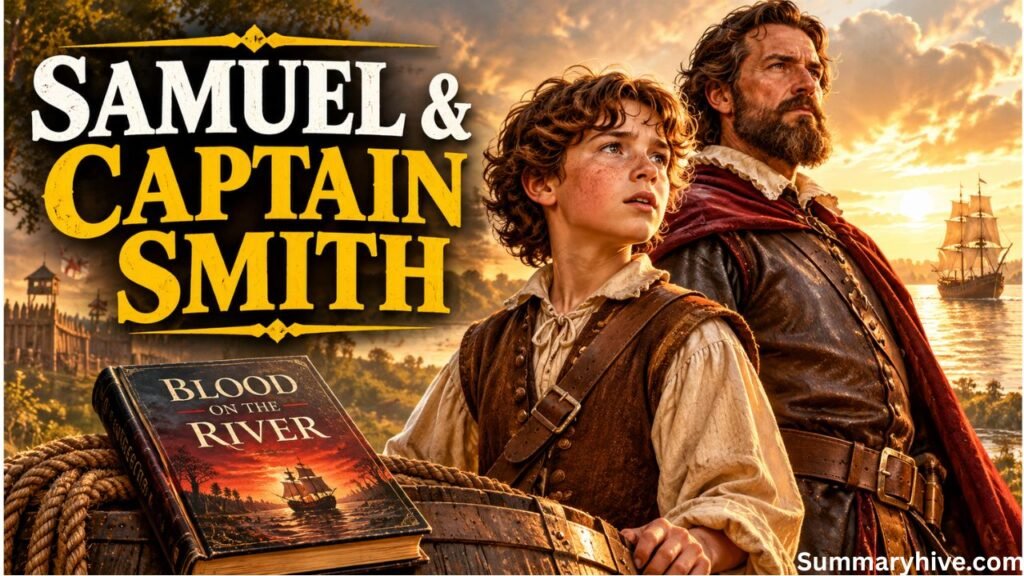
The journey needs people who can help with different tasks, and Samuel receives an opportunity to become a page to Captain John Smith.
This is a major turning point.
For a boy who has spent much of his life struggling to survive, becoming a page gives him a chance to travel, learn new skills, and experience something completely different.
However, Samuel does not immediately understand what his new position requires.
He must follow instructions, complete tasks, and learn how to behave around people from different social backgrounds.
Captain Smith also expects him to improve his behavior.
Smith does not want Samuel to remain an angry boy who thinks only about himself.
He wants him to become someone who can work with others.
What Does Samuel Learn From Captain Smith?
Captain Smith teaches Samuel several important lessons:
- Cooperation: People can achieve more when they work together.
- Responsibility: Everyone must contribute to the group’s survival.
- Courage: Difficult situations require calm and brave decisions.
- Leadership: A good leader must think about the needs of others.
- Understanding: Different people may have different customs and beliefs.
These lessons become increasingly important after the settlers reach Virginia.
Samuel slowly begins to understand that his future depends not only on his own actions but also on the people around him.
The Voyage to the New World: Life Aboard the Susan Constant
The journey across the Atlantic Ocean is one of the first major challenges in the novel.
Samuel boards the Susan Constant, a ship traveling with the other English expedition vessels toward Virginia.
For Samuel, the ship represents hope.
He imagines that America will provide gold, freedom, and opportunities that were impossible to find in London.
But the reality of the voyage is uncomfortable.
The ship is crowded, and passengers must live close to one another. There is little privacy, and the journey becomes difficult when the weather turns dangerous.
Samuel also struggles with seasickness and the unfamiliar experience of traveling across such a huge ocean.
The Problem Between Captain Smith and the Gentlemen
The voyage also introduces readers to the social divisions among the English settlers.
Captain Smith is an experienced man, but some wealthy gentlemen dislike him.
They believe that a person from a lower social class should not have so much influence.
Their disagreement becomes serious enough that Smith faces accusations and is placed in chains.
This situation shows that the English settlers are not a united group.
Even before reaching Virginia, they have problems with power, pride, and jealousy.
Samuel watches these events and begins to understand that leadership is not always easy.
A person may have the knowledge and ability to lead but still face opposition from others.
The First Meetings With Native Americans
As the expedition approaches Virginia, the settlers begin encountering Native American communities.
Some interactions involve peaceful exchanges, while other encounters create fear and suspicion.
Samuel realizes that the New World is not an empty place.
People already live there, and they have their own leaders, languages, traditions, and ways of surviving.
This discovery changes how he thinks about the journey.
America is not simply a place where English settlers can take whatever they want.
It is a land with existing communities and complicated relationships.
The voyage becomes an important learning experience for Samuel because it introduces the cultural and political challenges that will shape his life in Virginia.
The Founding of James Town: A New Beginning With New Dangers
When the English settlers finally reach Virginia in 1607, they begin establishing their settlement.
They choose a location along the James River and begin building homes and defensive structures.
The settlement is named James Town in honor of King James I of England.
The settlers have high hopes for their new home.
They believe the colony will bring wealth to England and provide them with new opportunities.
However, building a successful settlement is much harder than they imagined.
The Challenges of Building a Settlement
The settlers must deal with several problems:
- Finding safe drinking water.
- Building shelters and defensive structures.
- Growing or trading for food.
- Protecting themselves from attacks.
- Dealing with sickness and disease.
- Working together despite disagreements.
- Understanding the local environment.
Many settlers are not prepared for this kind of life.
Some are gentlemen who expect others to perform difficult physical work.
Others are soldiers or workers who must handle the daily responsibilities of the colony.
These differences create tension.
Captain Smith understands that everyone must contribute if James Town is going to survive.
He encourages the settlers to work rather than spend their time arguing.
Samuel’s Changing Attitude
Samuel begins to notice that Captain Smith’s ideas are practical.
He sees that building houses, collecting water, preparing food, and maintaining the settlement require teamwork.
He also starts developing better relationships with other people.
This is an important step in his personal growth.
In London, Samuel believed that depending on others was dangerous. In Virginia, he learns that cooperation can make difficult tasks possible.
James Town becomes more than a new settlement for Samuel. It becomes a place where he begins building a new identity.
Main Characters in Blood on the River
One of the strongest parts of Blood on the River: James Town, 1607 is its collection of characters. Each person plays an important role in Samuel’s journey and helps readers understand the challenges of early Jamestown.
Some characters are based on real historical people, while the story presents their experiences through a fictional narrative.
Here are the most important Blood on the River characters and their roles.
1. Samuel Collier, Blood on the River
Role: Main character and narrator.
Samuel Collier is a young orphan from London who travels to Virginia as Captain John Smith’s page.
At the beginning, Samuel is angry, lonely, and unwilling to trust other people. His difficult childhood has taught him to depend only on himself.
However, his experiences in Virginia slowly change him.
He learns new skills, develops friendships, and begins to understand the importance of working together.
Character Development: Samuel changes from a lonely and selfish boy into a caring and responsible young person.
His journey represents the emotional growth that can happen when people face difficult experiences and learn from them.
2. Captain John Smith, Blood on the River
Role: Samuel’s master, teacher, and an important historical figure.
Captain John Smith is an experienced explorer and military leader.
He understands that the English settlers cannot survive without discipline, hard work, and cooperation.
Some wealthy settlers dislike him because he is a commoner who has gained an important position.
However, Smith believes that leadership should depend on ability rather than social class.
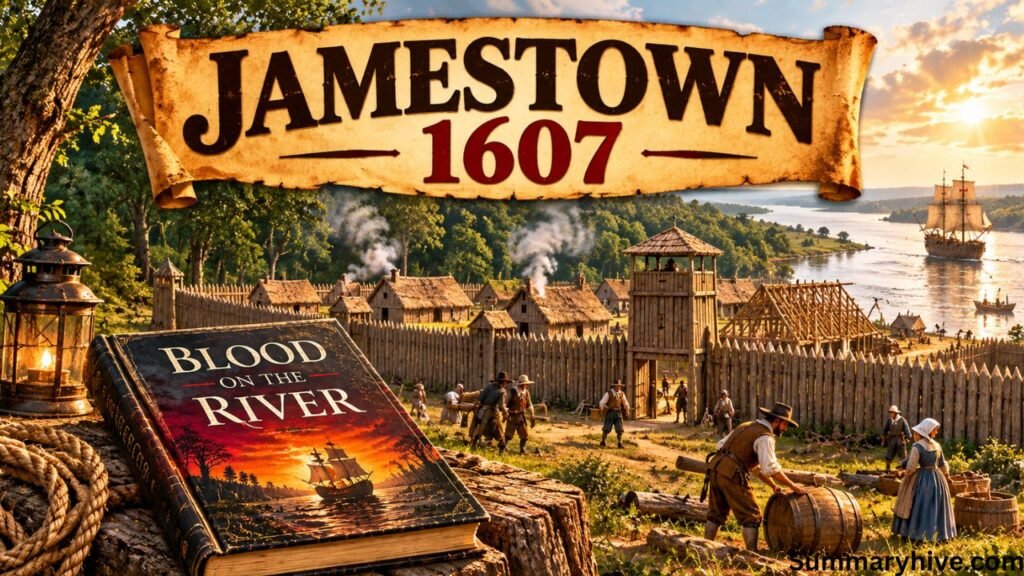
He teaches Samuel to become more responsible and to think about the needs of others.
Character Development: Captain Smith represents practical leadership, courage, and determination.
His relationship with Samuel becomes one of the most important relationships in the novel.
3. Pocahontas, Blood on the River
Role: Daughter of Chief Powhatan and an important connection between the two cultures.
Pocahontas is a young Native American girl who becomes interested in the English settlers.
She is curious, active, and friendly toward Samuel.
Her character helps readers understand that Native American people had their own communities, traditions, and ways of life long before the English arrived.
She also helps create connections between Samuel and the Powhatan world.
Importance: Pocahontas represents curiosity, cultural understanding, and the possibility of friendship between different communities.
It is important to remember that the novel’s portrayal of her is a fictionalized literary interpretation of a real historical person.
4. Chief Powhatan, Blood on the River
Role: Leader of the Powhatan people.
Chief Powhatan, also known as Wahunsonacock, is a powerful leader who controls a large alliance of Native American communities in Virginia.
He is intelligent, careful, and protective of his people.
He does not automatically trust the English settlers because their arrival could threaten his people’s land and security.
His decisions are based on protecting his community and maintaining his authority.
Importance: Chief Powhatan represents Native American leadership, political power, and the importance of protecting one’s homeland.
5. Reverend Hunt, Blood on the River
Role: Religious guide and Samuel’s mentor.
Reverend Hunt is one of the first adults to show Samuel kindness.
He takes Samuel under his guidance and helps him find a better direction in life.
He teaches Samuel to make decisions based on love rather than anger.
This lesson becomes important as Samuel faces difficult situations in Virginia.
Reverend Hunt also represents the religious beliefs that influenced many English settlers.
Importance: His kindness helps Samuel understand that adults can be trusted and that love can help people overcome anger.
6. Richard, Blood on the River
Role: Samuel’s companion and friend.
Richard is another young boy who travels to Virginia.
At first, Samuel has difficulty getting along with him. Their relationship begins with conflict because Samuel is used to solving problems through anger.
As they spend more time together, their relationship changes.
Richard becomes an important part of Samuel’s new life.
Importance: Richard helps demonstrate how friendship can develop even when people have difficult beginnings.
7. Namontack, Blood on the River
Role: Young Powhatan character and cultural connection.
Namontack is a young member of the Powhatan community who becomes connected with the English settlers.
He helps Samuel learn more about Native American language, beliefs, and customs.
His presence is important because readers see the story through someone who understands the Powhatan side of the cultural encounter.
Importance: Namontack represents friendship, cultural exchange, and mutual learning.
8. John Laydon, Blood on the River
Role: English settler and important member of Samuel’s new family.
John Laydon is a hardworking settler who becomes close to Samuel.
His relationship with Ann Burras and their growing family gives Samuel a sense of belonging.
John’s actions show that caring for others is an important part of building a community.
9. Ann Burras,Blood on the River
Role: Young English servant and member of the Laydon family.
Ann Burras arrives in Virginia as a servant.
Her experiences show some of the challenges faced by women in the early settlement.
She later becomes John Laydon’s wife.
Her relationship with Samuel helps him understand the meaning of family and emotional support.
10. Virginia Laydon, Blood on the River
Role: Daughter of John and Ann Laydon.
Virginia Laydon is an important child in the story.
Her birth gives Samuel another reason to care about the people around him.
He becomes emotionally connected to the Laydon family and begins thinking of them as his own family.
Importance: Virginia represents hope, new beginnings, and the possibility of building a loving family after experiencing loss.
The author’s official FAQ confirms that Virginia Laydon was a real historical person and survived the difficult period known as the Starving Time.
Samuel Collier Character Analysis: How Does He Change?
Samuel Collier is the heart of the novel.
His journey is not only about traveling from London to Virginia. It is also about learning how to become a better person.
At the beginning, Samuel has very little faith in other people.
His difficult childhood has made him believe that he must fight for everything he wants.
He often becomes angry when someone challenges him.
However, his experiences gradually teach him that this way of living will not always work.
Samuel at the Beginning
At the beginning of the novel, Samuel has several weaknesses:
- He does not trust other people.
- He often reacts with anger.
- He struggles to control his emotions.
- He finds it difficult to accept help.
- He believes that looking after himself is the most important thing.
These qualities are connected to his painful childhood.
He has lost his parents and has not received the love and protection that children need.
Samuel During the Journey
His journey aboard the ships introduces him to new people and situations.
He must follow Captain Smith’s instructions and learn how to behave around others.
He also begins to understand that surviving in a difficult environment requires teamwork.
His experiences with the Powhatan people help him understand that different cultures have different ways of living.
He slowly becomes more curious and less judgmental.
Samuel at the End
By the end of the novel, Samuel has changed significantly.
He has developed friendships and learned to care about people beyond himself.
His connection with the Laydon family is especially important.
He finally begins to experience something he has wanted for a long time: a sense of belonging.
Samuel’s greatest achievement is not reaching Virginia. It is discovering that he can build a better future through kindness, responsibility, and friendship.
This character development makes the book especially meaningful for young readers.
Major Themes in Blood on the River Explained
The novel explores several important themes through Samuel’s experiences.
These themes help readers understand the deeper meaning of the story.
Theme 1: Survival and Hardship
Survival is one of the most important themes in Blood on the River.
The English settlers travel to Virginia expecting wealth and opportunity.
Instead, they discover that surviving in an unfamiliar environment is extremely difficult.
They face:
- Hunger and food shortages.
- Dangerous weather.
- Sickness and disease.
- Conflicts with other groups.
- Lack of proper shelter.
- Internal disagreements.
Samuel also faces personal challenges.
He must learn how to survive emotionally and physically.
His experiences show that survival requires patience, courage, and cooperation.
Why It Matters: This theme teaches readers that success is not always easy. People must work together and make difficult decisions when facing challenges.
Theme 2: Friendship and Trust
Samuel begins the story believing that he cannot trust anyone.
His childhood has made him afraid of depending on other people.
However, his relationships with Richard, Captain Smith, Reverend Hunt, and others slowly change his thinking.
He discovers that friendship can provide support during difficult times.
Trust also helps him become more confident.
Why It Matters: The novel shows that friendship is not simply about spending time together. It is about helping others, accepting support, and building meaningful relationships.
Theme 3: Leadership and Responsibility
Captain John Smith represents one of the strongest examples of leadership in the novel.
He understands that the settlers must work together.
He encourages people to contribute rather than allowing social position to determine who performs important tasks.
His leadership is different from the behavior of some wealthy settlers who believe they deserve special treatment.
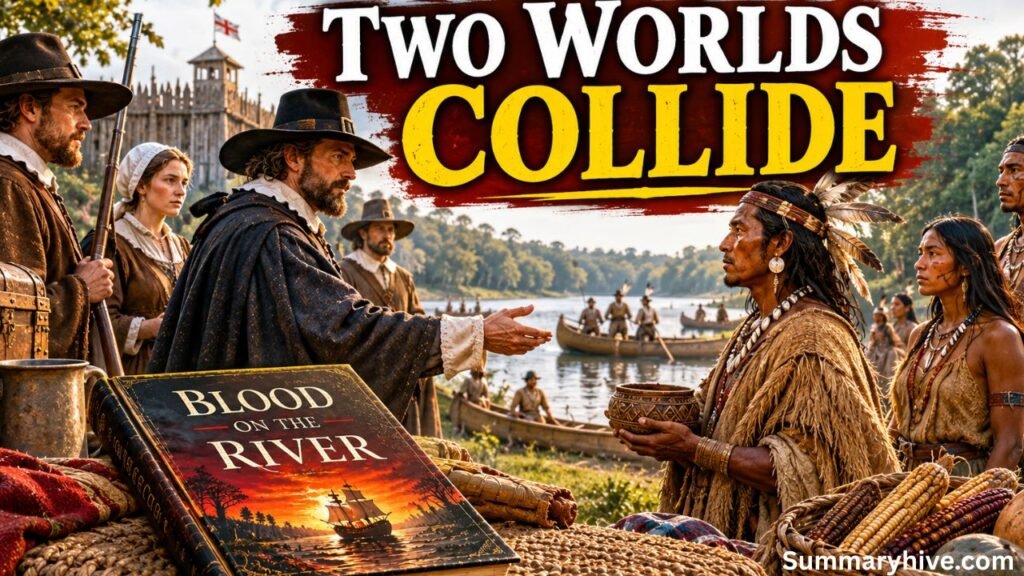
Samuel learns from Smith that a good leader must think about the whole community.
Why It Matters: This theme teaches readers that real leadership comes from responsibility, practical decisions, and concern for others.
Theme 4: Cultural Differences and Understanding
One of the most important subjects in the novel is the relationship between the English settlers and the Powhatan people.
The two groups have different languages, beliefs, customs, and ways of organizing their communities.
The English settlers often misunderstand Native American traditions.
Similarly, the Native American communities must decide how to respond to the arrival of unfamiliar English people.
Samuel gradually becomes more interested in understanding these differences.
His relationships with Pocahontas and Namontack help him see the world from another perspective.
Why It Matters: This theme encourages readers to respect different cultures and avoid judging people simply because their traditions are unfamiliar.
It also reminds readers that cultural encounters can involve unequal power, conflict, and competing interests.
Theme 5: Family and Belonging
Samuel begins the novel without a stable family.
He has lost his parents and struggles to find people who care about him.
His relationship with Reverend Hunt gives him guidance.
His friendships provide emotional support.
Later, his connection with John and Ann Laydon gives him something even more meaningful.
He begins to feel that he belongs somewhere.
Why It Matters: The novel shows that family is not only about blood relationships. Love, protection, friendship, and shared experiences can also create a family.
Theme 6: Social Class and Inequality
Social class creates many problems among the English settlers.
Some wealthy gentlemen believe they deserve greater respect because of their position.
Captain John Smith faces criticism because he is not from a noble family.
This creates conflict between people who have different ideas about authority.
The novel also shows the difficult position of servants and poor children like Samuel.
Why It Matters: The story encourages readers to think about fairness and the importance of judging people by their actions rather than their wealth or social position.
Theme 7: Courage and Personal Growth
Samuel must face many frightening situations.
He experiences hunger, danger, loss, and uncertainty.
At first, he responds to problems with anger.
As the story continues, he learns to become more thoughtful and responsible.
His courage is not only about facing physical danger.
It is also about changing his behavior and accepting help from others.
Why It Matters: The novel teaches that personal growth often requires people to face their fears and learn from their mistakes.
The Relationship Between the English Settlers and the Powhatan People
The relationship between the English settlers and the Powhatan people is one of the most important parts of the novel.
When the English arrive in Virginia, they enter a region where Native American communities already have established homes, leaders, traditions, and political relationships.
The Powhatan people are not simply background characters.
They are an organized society with their own interests and concerns.
Why Do the Two Groups Experience Conflict?
There are several reasons for the tension between them.
1. Different Expectations
The English settlers want to establish a permanent colony.
The Powhatan people must consider how this new settlement could affect their land and political power.
2. Cultural Differences
The two groups have different languages, beliefs, clothing, food traditions, and social practices.
These differences sometimes create confusion and misunderstanding.
3. Competition for Resources
Both communities need food, land, and other resources.
As the English settlement grows, competition becomes more serious.
4. Lack of Trust
The English do not always understand Native American intentions.
Likewise, the Powhatan leadership must decide whether the newcomers can be trusted.
How Does Samuel Help Readers Understand Both Cultures?
Samuel is important because he begins learning about the Powhatan people instead of viewing them only as strangers.
Through his relationships with Pocahontas and Namontack, he discovers that their society has its own knowledge and traditions.
He also learns that communication can reduce misunderstandings.
However, the novel does not suggest that every conflict can be solved through friendship.
The larger problems involve land, power, survival, and the future of both communities.
The important lesson is that understanding another culture requires respect, patience, and a willingness to listen.
Why Is Cooperation So Important in Blood on the River?
Cooperation is one of the strongest messages of the novel.
The English settlers arrive in Virginia with different skills and expectations.
Some are experienced workers, while others are wealthy gentlemen who are not prepared for difficult physical labor.
This creates problems because the settlement needs everyone’s help.
Captain Smith understands that people cannot survive if they refuse to work together.
He encourages settlers to contribute to the community.
Samuel slowly learns the same lesson.
Examples of Cooperation in the Novel
Working on the Settlement
The settlers must build shelters and defensive structures. These tasks require many people working together.
Finding Food
Food is essential for survival. The settlers must learn how to obtain it and make sensible decisions about sharing resources.
Learning From Native Americans
The English settlers do not understand the local environment as well as the people who have lived there for generations.
Learning from Native American knowledge can help them understand the region.
Building Relationships
Friendship and communication help people overcome some cultural misunderstandings.
What Does Samuel Learn?
Samuel discovers that he does not have to fight every battle alone.
He learns that asking for help is not a sign of weakness.
He also understands that his actions can affect other people.
This is an important change from the boy readers meet at the beginning.
The novel’s message is clear: a community becomes stronger when its members support one another.
Blood on the River Ending Explained: What Happens at the End?
Warning: Major spoilers ahead.
The ending of Blood on the River: James Town, 1607 brings Samuel Collier’s journey to an emotional conclusion.
After experiencing hunger, violence, sickness, and difficult relationships, Samuel finally begins to understand what it means to care about other people.
However, the final events also show how dangerous life has become for the English settlers.
Samuel’s Decision to Protect Baby Virginia
One of the most important events near the end of the novel involves baby Virginia Laydon.
Samuel has become deeply attached to John and Ann Laydon and their daughter.
He considers them his family because they have given him something he has missed throughout his childhood: love and belonging.
As the danger around James Town increases, Samuel becomes worried about the baby’s safety.
He believes that Virginia will be safer at Point Comfort than in James Town.
When Ann decides to remain behind, Samuel becomes desperate.
He makes a dangerous decision.
Samuel takes baby Virginia without her mother’s permission and carries her to Point Comfort.
He believes he is protecting the child, but his actions create serious problems.
When Ann discovers what happened, she becomes extremely angry.
Samuel is arrested and placed in shackles because taking the baby is considered a serious crime.
He believes he may receive a harsh punishment.
The Attack on Captain Ratcliffe’s Expedition
While Samuel waits for his punishment, terrible news arrives.
An English trading expedition has been attacked.
The settlers discover that the journey was a trap, and Captain Ratcliffe has been killed.
The attack changes the situation for Samuel.
John and Ann Laydon understand why Samuel took their baby.
They explain that he was trying to protect their family rather than cause harm.
They help get the charges against him dropped.
This moment is important because Samuel’s actions finally show how much he has changed.
At the beginning of the novel, he cared mostly about himself.
Now, he is willing to risk punishment to protect someone he loves.
Where Does Samuel End Up?
By February 1610, Samuel is living at Point Comfort with John Laydon, Ann Laydon, and baby Virginia.
Unlike the people struggling in James Town, Samuel and the Laydon family are relatively comfortable.
They have shelter and enough food to survive the winter.
Samuel finally has something that he has wanted for most of his life: a family.
However, he still worries about the settlers who remain in James Town.
He knows that their situation is dangerous.
The ending also includes an afterword that explains what happened to the Jamestown settlers during the terrible winter of 1609–1610.
Many people died from starvation and disease.
This period became known as the Starving Time.
The ending is both hopeful and sad.
Samuel finds safety and belonging, but the larger settlement continues to suffer.
What Is the Meaning of the Ending?
The ending teaches readers several important lessons.
First, love can change people.
Samuel becomes a more caring person because he develops meaningful relationships.
Second, courage sometimes means protecting others.
His decision to take baby Virginia is risky, but it comes from his desire to keep her safe.
Third, survival is not only about physical strength.
People also need friendship, support, and a sense of belonging.
Finally, history contains both hope and tragedy.
Samuel’s happy ending exists alongside the suffering of many other settlers.
The novel closes by showing that personal happiness and historical tragedy can exist at the same time. BookRags
Is Blood on the River Based on a True Story?
Yes. Blood on the River is based on real historical events and people, but it is still a work of historical fiction.
Elisa Carbone combines historical research with storytelling to create a novel that young readers can enjoy.
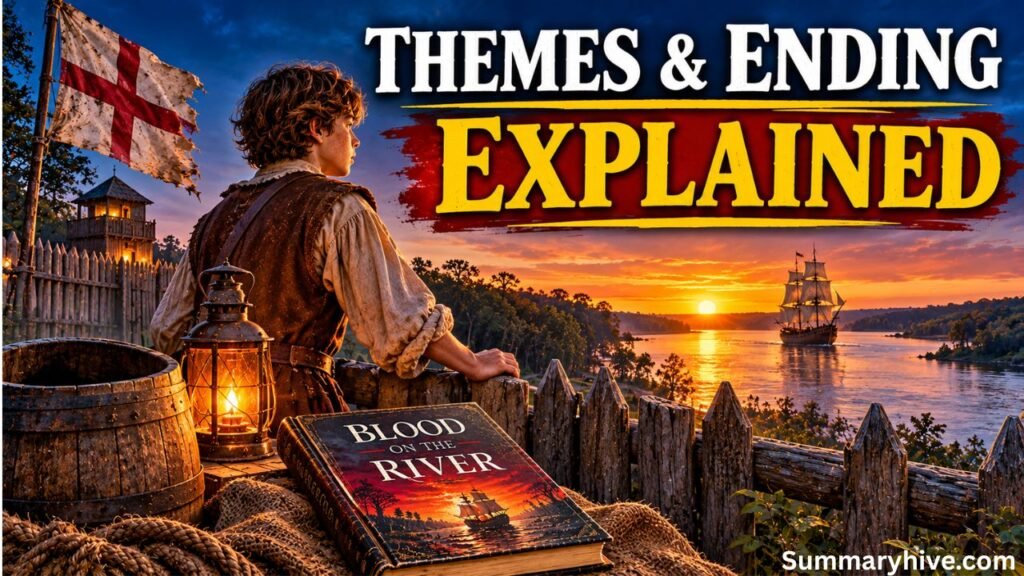
The book focuses on the establishment of Jamestown in 1607 and the difficult early years of the English settlement.
Several characters are connected to real historical people.
Historical Figures in the Novel
| Character | Historical Background |
|---|---|
| Captain John Smith | English explorer and leader in early Jamestown |
| Pocahontas | Daughter of Chief Powhatan |
| Chief Powhatan | Leader of the Powhatan political alliance |
| John Laydon | Early English Jamestown settler |
| Ann Burras | Historical English woman who arrived in Jamestown |
| Samuel Collier | Historical figure associated with Captain John Smith |
The author explains on her official website that she researched original historical records and followed the lives of the real people represented in the story.
However, readers should understand that historical records do not provide complete information about every conversation, feeling, or private experience.
This is where historical fiction uses imagination.
For example, Samuel’s personal thoughts and emotional experiences help make the story interesting, but readers should not treat every conversation as a verified historical event.
What Is Fictional in the Story?
The novel includes historical events and real people, but some details are presented through imaginative storytelling.
These may include:
- Private conversations between characters.
- Samuel’s personal thoughts and feelings.
- Detailed emotional reactions.
- Conversations between Samuel and other historical figures.
- Personal experiences that were not fully recorded in historical documents.
This does not make the novel less valuable.
Instead, it allows readers to imagine what life might have felt like for people living during that period.
The best way to understand the book is to treat its historical setting and major events seriously while recognizing that it is not a complete historical record.
The Starving Time: Understanding the Historical Tragedy
One of the darkest historical events connected to Blood on the River is the Starving Time.
The Starving Time occurred during the winter of 1609–1610.
By this point, the Jamestown settlement was already struggling.
The colonists had experienced food shortages, conflicts, disease, and problems with their relationships with Native American communities.
The situation became much worse when food supplies were limited.
Why Did the Starving Time Happen?
Several problems contributed to the disaster.
1. Food Shortages
The settlers did not have enough food to support the population.
2. Disease
Illness spread among the colonists, making survival even harder.
3. Conflict With Native Americans
Violence and worsening relationships made it more difficult for settlers to obtain food through trade.
4. Poor Planning
The colony had serious problems with leadership, preparation, and resource management.
5. Harsh Winter Conditions
Cold weather and limited supplies made life extremely dangerous.
How Does the Starving Time Connect to the Novel?
The novel uses the historical disaster to show how fragile the English settlement really was.
The settlers arrive in Virginia hoping to create a successful colony.
However, their lack of preparation and internal disagreements make survival increasingly difficult.
Samuel’s experiences at Point Comfort provide a contrast to the suffering at James Town.
His story helps readers understand that survival depends on preparation, cooperation, and understanding the environment.
The Starving Time also reminds readers that the founding of Jamestown was not an easy or peaceful process.
It involved enormous human suffering.
Symbolism and Literary Devices in Blood on the River
Elisa Carbone uses several literary elements to make the story more meaningful.
These elements help readers understand Samuel’s emotional journey and the larger historical events.
Here are some important examples.
1. Samuel’s Mother’s Locket
The locket is one of the most meaningful objects in the novel.
It belonged to Samuel’s mother and reminds him of the love he experienced before losing her.
When Samuel tries to recover it, his actions show how deeply he misses his family.
Symbolic Meaning: The locket represents love, memory, loss, and Samuel’s connection to his past.
It also shows why Samuel struggles emotionally.
He is not simply an angry boy. He is someone who has experienced deep sadness.
2. The Three Ships
The Susan Constant, Godspeed, and Discovery carry the English settlers across the Atlantic Ocean.
They represent a journey into an unfamiliar world.
For Samuel, the ships offer an opportunity to leave his difficult life in London.
However, the journey also brings uncertainty and danger.
Symbolic Meaning: The ships represent hope, change, exploration, and the unknown future.
3. The River
The James River is an important part of the setting.
It connects the English settlement with the surrounding environment and becomes part of the settlers’ daily lives.
The river also reminds readers that the land is not simply a resource to be claimed.
It is part of a larger environment that supports existing communities.
Symbolic Meaning: The river can be understood as a symbol of change, connection, and the uncertain journey toward a new life.
4. Blood
The title Blood on the River suggests violence, suffering, and the human cost of colonization.
The settlement is connected to conflicts that affect both English settlers and Native American communities.
The title reminds readers that the creation of a colony involves more than exploration and adventure.
It also involves loss and human suffering.
Symbolic Meaning: Blood represents violence, sacrifice, conflict, and the tragic consequences of power struggles.
5. Point Comfort
Point Comfort becomes an important place near the end of the novel.
For Samuel, it offers safety and the possibility of a new family life.
Symbolic Meaning: Point Comfort represents protection, hope, belonging, and a new beginning.
Literary Devices Used in the Novel
Apart from symbolism, the author uses several storytelling techniques.
| Literary Device | How It Works in the Novel |
|---|---|
| First-Person Narration | Samuel tells the story from his own perspective. |
| Historical Fiction | Real historical events are combined with fictional storytelling. |
| Foreshadowing | Early warnings suggest future danger and conflict. |
| Conflict | Characters face personal, social, cultural, and environmental problems. |
| Character Development | Samuel changes through his experiences. |
| Setting | London, the Atlantic Ocean, and Virginia help create the historical atmosphere. |
These literary techniques make the novel easier to understand while giving readers a deeper connection to its characters.
Common Misconceptions About Blood on the River
Readers sometimes misunderstand important details about the novel.
Here are some common misconceptions and their explanations.
Misconception 1: Blood on the River Is a True Story
Correction: The book is historical fiction. It uses real people and historical events, but some personal experiences and conversations are presented through imaginative storytelling.
Misconception 2: Jamestown Was an Empty Land
Correction: Native American communities, including the Powhatan people, already lived in Virginia before the English settlers arrived.
Misconception 3: Samuel Is a Real Historical Narrator
Correction: Samuel Collier is presented as the novel’s narrator. The author uses his perspective to tell the story of early Jamestown.
Misconception 4: Captain John Smith Was Always Supported by the Settlers
Correction: Smith faced serious opposition from wealthy English gentlemen who disagreed with his leadership and social position.
Misconception 5: Pocahontas Was Only a Supporting Character
Correction: Pocahontas is an important historical figure connected to the Powhatan community and the early English settlement.
Misconception 6: The Settlers Easily Built Jamestown
Correction: The settlement faced major challenges, including disease, hunger, conflict, and poor preparation.
Misconception 7: Samuel’s Journey Is Only About Adventure
Correction: His journey is also about emotional growth, friendship, responsibility, and understanding different cultures.
Understanding these points makes the Blood on the River study guide more useful for students and readers.
Important Lessons and Key Takeaways From Blood on the River
The novel offers many lessons that young readers can apply to everyday life.
Here are ten important takeaways.
- Friendship matters: Good friends can help us during difficult times.
- Cooperation creates strength: People can achieve more when they work together.
- Do not judge people by their background: A person’s actions matter more than their social position.
- Respect different cultures: People have different traditions, beliefs, and ways of living.
- Learn from mistakes: Samuel becomes a better person because he learns from his experiences.
- Leadership requires responsibility: A good leader thinks about the needs of the whole community.
- Courage is important: Difficult situations require brave and thoughtful decisions.
- Family can take different forms: People who love and support one another can create a family.
- History has different perspectives: We should try to understand the experiences of everyone involved in historical events.
- Kindness can change lives: Samuel’s experiences show how important compassion and understanding can be.
The most important lesson is that people do not have to face every challenge alone.
Samuel’s transformation shows how friendship, responsibility, and kindness can help someone build a better future.
Who Should Read Blood on the River?
Blood on the River is a good choice for readers who enjoy historical adventures and stories about personal growth.
The book is especially suitable for middle-grade readers.
Here are the types of readers who may enjoy it.
Middle School Students
Students studying early American history may find the book helpful.
It introduces important events surrounding the establishment of Jamestown.
Historical Fiction Fans
Readers who enjoy stories based on real historical events will appreciate the combination of historical figures and fictional storytelling.
Adventure Readers
The journey across the Atlantic, dangerous encounters, and challenges of settlement make the story exciting.
Readers Interested in Native American History
The novel introduces the Powhatan people and explores their relationships with English settlers.
Readers should also explore additional Native American historical sources to understand perspectives beyond the novel.
Teachers and Parents
Teachers can use the book to introduce historical fiction, character development, and early colonial history.
Parents may also enjoy reading it with children and discussing the historical events.
Book Clubs
The story provides several interesting discussion topics, including friendship, leadership, survival, cultural differences, and social inequality.
Overall, the book is particularly valuable for readers who want to learn history through an engaging story.
Blood on the River Frequently Asked Questions
Here are answers to common questions about Blood on the River by Elisa Carbone.
1. What is Blood on the River about?
Blood on the River is a historical fiction novel about Samuel Collier, a young orphan who travels from London to Virginia in 1606. He becomes Captain John Smith’s page and experiences the challenges of establishing the Jamestown settlement.
2. Who wrote Blood on the River?
Elisa Carbone wrote Blood on the River: James Town, 1607. The book was originally published in 2006 by Viking Books for Young Readers.
3. Who is the main character in Blood on the River?
Samuel Collier is the main character and narrator. He is a young orphan from London who travels to Virginia with Captain John Smith.
4. Is Blood on the River based on a true story?
Yes. The novel is based on real historical events and people connected to Jamestown. However, it is historical fiction rather than a nonfiction history book.
5. When does Blood on the River take place?
The story begins in 1606 in London and follows the early Jamestown settlement from 1607 through the difficult winter of 1609–1610.
6. What is the main theme of Blood on the River?
One of the main themes is cooperation and survival. The story shows that people must work together, respect one another, and take responsibility to overcome difficult situations.
7. Who is Captain John Smith in Blood on the River?
Captain John Smith is an English explorer and leader who becomes Samuel’s master. He teaches Samuel about responsibility, hard work, leadership, and cooperation.
8. What role does Pocahontas play in Blood on the River?
Pocahontas is the daughter of Chief Powhatan. She is an important historical character who helps introduce readers to the Powhatan community and its relationship with the English settlers.
9. What is the Powhatan tribe in Blood on the River?
The Powhatan people were a group of Native American communities in Virginia. They had established societies, leaders, traditions, and political relationships before the English arrived.
10. What happens to Samuel Collier at the end?
Samuel ends up living at Point Comfort with John and Ann Laydon and their baby daughter, Virginia. He finally experiences safety and a sense of family after many difficult experiences.
11. Why does Samuel take baby Virginia to Point Comfort?
Samuel believes that baby Virginia will be safer at Point Comfort than in James Town. He takes her without Ann’s permission because he is worried about her safety.
12. What is the Starving Time in Blood on the River?
The Starving Time refers to the terrible winter of 1609–1610 when the Jamestown settlers experienced severe food shortages, disease, and widespread deaths.
13. What does Samuel’s mother’s locket symbolize?
The locket symbolizes Samuel’s love for his mother, his painful memories, and his desire to remain connected to his family.
14. What age group is Blood on the River suitable for?
The novel is generally recommended for middle-grade readers, particularly children around ages 10 and older. It can also be enjoyed by adults interested in historical fiction.
15. Is Blood on the River part of a series?
The book has a related sequel titled Poison in the Colony by Elisa Carbone. The sequel follows Virginia Laydon as an older girl.
Author and Editorial Research: How This Summary Blood on the River Was Prepared
This Blood on the River summary and study guide is designed to help students, teachers, parents, and general readers understand the novel.
Readers who need more historical information should also consult reputable resources such as the National Park Service and Historic Jamestowne.
Editorial Note: This article is an independent literary summary and educational guide. It does not replace the original novel or professional historical research.
Final Review: Is Blood on the River Worth Reading?
Yes, Blood on the River is worth reading, especially for people interested in historical fiction, early American history, and stories about personal growth.
Elisa Carbone takes an important period of American history and presents it through the experiences of a young boy.
Samuel Collier’s journey makes the difficult history of Jamestown easier to understand.
Readers experience his struggles, mistakes, friendships, and changing attitude toward other people.
The book also introduces important historical figures such as Captain John Smith, Pocahontas, and Chief Powhatan.
One of its greatest strengths is the way it connects personal experiences with larger historical events.
However, readers should remember that the novel presents the English settlement primarily through Samuel’s experiences. Exploring additional historical sources can provide a fuller understanding of the Powhatan people and the consequences of English colonization.
Final Verdict: Blood on the River is an engaging historical novel that combines adventure, history, friendship, and important life lessons. It is an excellent choice for middle school readers who want to explore the early history of Jamestown through storytelling.